

In today’s rapidly evolving world of electronics and scientific research, the demand for precision and reliability in measurement tools has never been higher. Engineers, technicians, and researchers alike rely on advanced devices to observe, record, and analyze signals that often operate at microsecond intervals and millivolt ranges. Selecting the right tools can be the difference between accurate results and misleading data, making the choice of measurement instruments critical. Among the vast array of devices available, the PlasmaSensCompact has emerged as a notable solution for professionals seeking both versatility and accuracy. Its integration into modern labs and fieldwork scenarios highlights the increasing importance of compact, user-friendly tools that do not compromise on performance.
Equally important in this landscape are the measurement instruments themselves. From digital multimeters to high-speed oscilloscopes, these instruments provide a window into the otherwise invisible world of electrical signals. For researchers dealing with sensitive circuits or high-voltage environments, isolating the measurement device from potential interference is crucial, which is where isolated USB oscilloscopes come into play. These instruments allow for safe and accurate data acquisition, even in challenging conditions where standard devices may fall short.
However, even the most sophisticated instruments require careful setup and maintenance to achieve precise readings. One often overlooked but essential process is oscilloscope probe compensation. Proper probe compensation ensures that the signals captured by the oscilloscope truly represent the behavior of the circuit under test, avoiding distortions that could lead to erroneous conclusions. Understanding this process is fundamental for anyone aiming to leverage the full potential of modern oscilloscopes and measurement instruments.
This article will explore these four key aspects—PlasmaSensCompact, measurement instruments, isolated USB oscilloscopes, and oscilloscope probe compensation—through a series of detailed questions and answers. Each section will provide insights not only into the features and functions of these technologies but also into their practical applications, helping professionals make informed decisions and optimize their measurement processes. By examining each topic in depth, readers will gain a comprehensive understanding of how modern tools and techniques come together to deliver reliable, high-precision results in electronics and scientific research.
What is the PlasmaSensCompact, and why is it important in modern measurement applications?
The PlasmaSensCompact is an innovative measurement instrument designed to meet the growing demands of precision, portability, and efficiency in electronics and scientific research. At its core, the PlasmaSensCompact serves as a versatile tool for monitoring and analyzing electrical signals in a range of applications, from laboratory experiments to industrial diagnostics. Unlike larger, traditional devices, the PlasmaSensCompact combines advanced sensing capabilities with a compact, user-friendly design, allowing engineers and technicians to perform high-precision measurements without the burden of bulky equipment. Its portability does not come at the expense of functionality; this device integrates seamlessly with various measurement setups, providing reliable data across diverse scenarios.
One of the key advantages of the PlasmaSensCompact is its ability to deliver accurate measurements in environments where conventional instruments might struggle. For instance, when dealing with high-frequency signals or circuits with sensitive components, the PlasmaSensCompact minimizes interference and signal distortion, ensuring that the data collected is both precise and repeatable. This makes it an essential tool for research labs, educational institutions, and industrial testing facilities, where the integrity of measurement results directly influences the quality of outcomes.
Moreover, the PlasmaSensCompact is highly compatible with modern data acquisition systems. It can interface with computers and other devices through standard communication protocols, allowing users to capture, analyze, and store data efficiently. This connectivity makes the PlasmaSensCompact a central component in automated testing setups, where continuous monitoring and real-time analysis are crucial. Engineers can rely on the device to detect subtle changes in signal behavior, enabling proactive troubleshooting and optimization of electronic circuits.
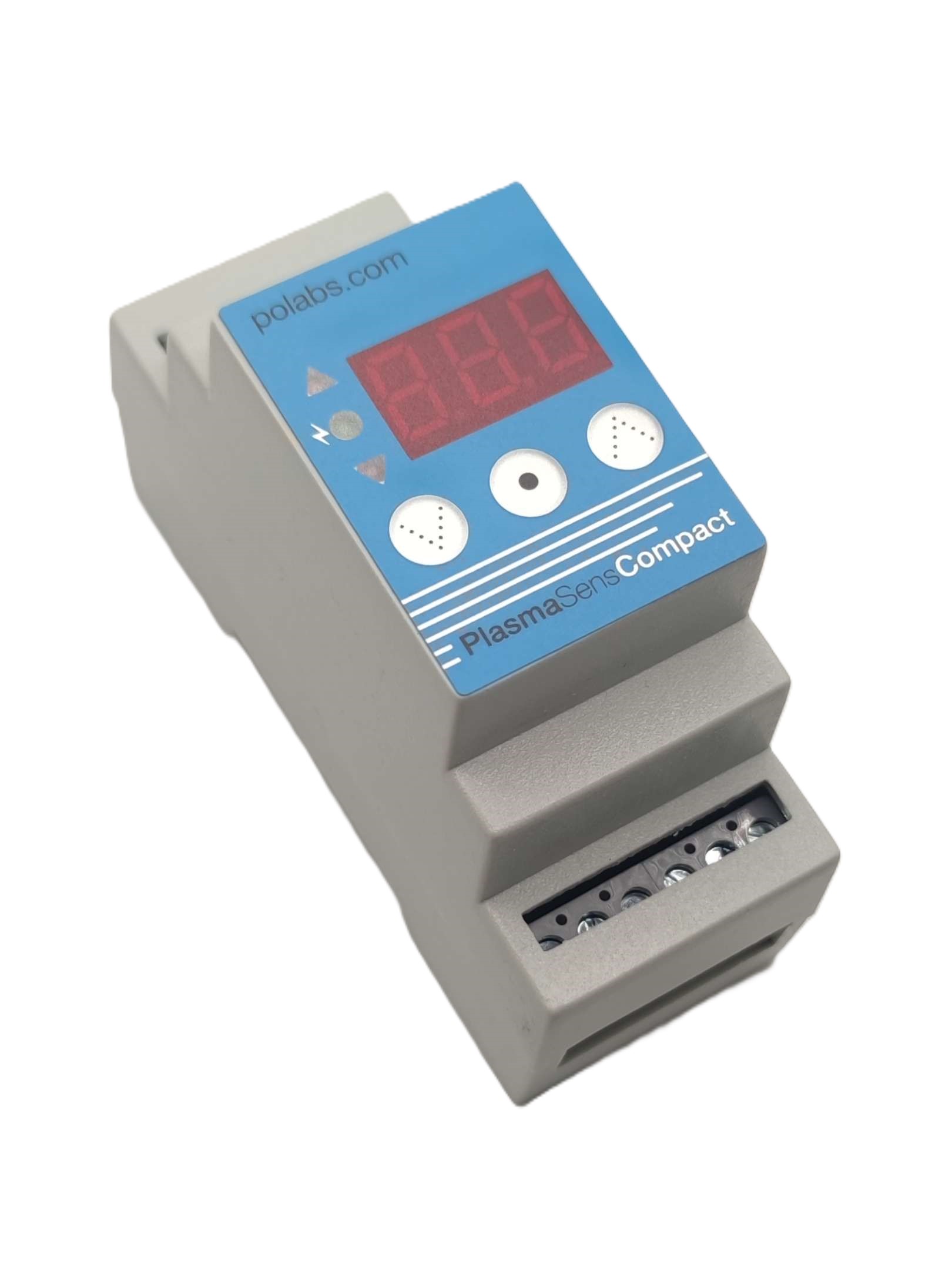
In addition, the PlasmaSensCompact is designed with user experience in mind. Its intuitive interface, robust construction, and low maintenance requirements make it accessible to both experienced professionals and newcomers to the field. The device’s design emphasizes not only performance but also convenience, demonstrating that high-quality measurement instruments do not need to be complicated or cumbersome.
In summary, the PlasmaSensCompact represents a significant step forward in measurement technology. By combining accuracy, versatility, and portability, it allows professionals to achieve precise results in a wide range of applications. Its integration into modern labs and testing environments underscores its value, while its compatibility with various measurement instruments ensures it remains a reliable tool for ongoing experimentation and analysis. Whether in advanced research or practical diagnostics, the PlasmaSensCompact continues to set a standard for excellence in measurement solutions.
More: tehnologija
Why are measurement instruments essential in electronics and scientific research?
Measurement instruments are the foundation of modern electronics, engineering, and scientific experimentation. These tools allow professionals to quantify, analyze, and interpret physical phenomena with accuracy and reliability.
Without precise measurement instruments, understanding the behavior of circuits, systems, or experimental setups would be nearly impossible, leaving researchers and engineers to rely on assumptions rather than data-driven conclusions. Measurement instruments range from simple devices like voltmeters and ammeters to complex digital oscilloscopes and spectrum analyzers, each serving a specific role in capturing and interpreting electrical signals.
One of the primary reasons measurement instruments are so critical is their ability to provide real-time feedback. Engineers and technicians often need to observe how signals fluctuate under varying conditions, and measurement instruments offer an accurate representation of these changes.
By using high-quality instruments, such as digital multimeters, function generators, or the advanced PlasmaSensCompact, users can ensure that their readings reflect the true behavior of the system. This capability is vital not only in research but also in industrial settings, where precise control over electrical parameters can impact product quality, safety, and performance.
Modern measurement instruments are also designed to integrate seamlessly with other technologies, enabling sophisticated data acquisition and analysis. Devices like oscilloscopes, spectrum analyzers, and isolated USB oscilloscopes allow engineers to capture complex signals and transfer data to computers for further evaluation. This connectivity enhances the ability to detect anomalies, perform trend analysis, and optimize circuits more efficiently. The versatility of these instruments ensures that a single tool can serve multiple purposes, from routine testing to advanced experimental applications.
Furthermore, proper use of measurement instruments requires a solid understanding of both the device and the phenomenon being measured. For example, oscilloscopes, probes, and sensors must be calibrated and compensated correctly to avoid introducing errors. When combined with instruments like the PlasmaSensCompact, measurement tools offer unmatched precision, allowing researchers to explore subtle signal variations that could otherwise go unnoticed.
In essence, measurement instruments are indispensable for anyone working with electrical systems or scientific experiments. They transform abstract electrical properties into tangible, analyzable data, enabling informed decision-making and accurate troubleshooting. Whether used in a high-tech laboratory, an industrial production line, or a field-testing scenario, these instruments provide the clarity and confidence professionals need to achieve consistent, reliable results. The importance of measurement instruments cannot be overstated, as they form the very backbone of modern experimentation and engineering practices.
What is an isolated USB oscilloscope, and why is it important for safe and accurate measurements?
An isolated USB oscilloscope is a type of measurement instrument specifically designed to provide high-precision signal analysis while maintaining electrical isolation between the device under test and the measurement system. Unlike standard oscilloscopes, which share a common ground with the connected computer or other equipment, isolated USB oscilloscopes prevent ground loops, reduce noise, and eliminate the risk of damaging sensitive circuits or connected devices. This makes them particularly valuable in industrial applications, high-voltage testing, and scenarios where safety and signal integrity are paramount.
One of the key benefits of an isolated USB oscilloscope is its ability to protect both the equipment and the operator. Electrical circuits often carry voltages that can be hazardous or incompatible with standard measurement instruments. By providing galvanic isolation, these oscilloscopes ensure that any high-voltage spikes or transients do not reach the computer or other connected devices. This isolation allows engineers and researchers to safely measure signals from power electronics, automotive systems, or laboratory experiments without risking equipment damage or personal injury.
In addition to safety, isolated USB oscilloscopes excel in delivering accurate, noise-free measurements. Ground loops and interference are common challenges when working with sensitive electronics, and they can distort signals, leading to erroneous readings. The isolation provided by these oscilloscopes minimizes such interference, allowing for precise data capture even in electrically noisy environments. This makes isolated USB oscilloscopes indispensable for professional engineers who require high fidelity when analyzing complex signals, from high-frequency pulses to subtle waveform variations.
Another advantage of isolated USB oscilloscopes is their seamless integration with computers and software for advanced data acquisition and analysis. The USB interface allows for compact, portable setups while providing access to powerful digital processing and visualization tools. Users can perform automated testing, store historical data, and apply sophisticated analysis techniques without compromising safety or measurement quality. This combination of portability, precision, and connectivity makes isolated USB oscilloscopes a preferred choice for both laboratory and field applications.
In practical terms, using an isolated USB oscilloscope ensures that engineers and researchers can obtain reliable, repeatable results under challenging conditions. Whether paired with a device like the PlasmaSensCompact or used as part of a larger measurement system, these oscilloscopes enhance both safety and accuracy. Their ability to provide clear, isolated measurements highlights the growing importance of advanced measurement instruments in modern electronics, making them an essential tool for anyone seeking precision, reliability, and protection in their work.
What is oscilloscope probe compensation, and why is it essential for accurate measurements?
Oscilloscope probe compensation is a crucial process that ensures the signals observed on an oscilloscope accurately reflect the behavior of the circuit under test. Without proper probe compensation, even the most advanced measurement instruments, including the PlasmaSensCompact or isolated USB oscilloscopes, can produce distorted or misleading waveforms. The concept is particularly important when using high-frequency signals, where minor mismatches between the probe and the oscilloscope’s input impedance can significantly alter the displayed waveform. Proper compensation corrects these discrepancies, enabling precise and reliable signal measurement.
At its core, oscilloscope probe compensation involves adjusting the probe so that it presents the correct impedance to the oscilloscope input. Most probes include a small adjustable capacitor that can be tuned to match the oscilloscope’s input capacitance. When the probe is correctly compensated, a square wave applied to the oscilloscope calibration output appears as a clean, sharp waveform, with flat tops and well-defined edges. If the probe is under-compensated, the waveform will appear rounded, while over-compensation causes exaggerated peaks. Both scenarios can misrepresent the true signal, potentially leading to incorrect conclusions about circuit performance.
Oscilloscope probe compensation is not only about waveform clarity; it directly affects measurement accuracy. Engineers and technicians rely on precise voltage and timing information to make design decisions, troubleshoot faults, and verify performance. Using an uncompensated probe can introduce errors in both amplitude and timing measurements, particularly in fast-switching circuits or high-frequency components. This is why oscilloscope probe compensation is considered a fundamental step in any measurement setup, ensuring that signals are faithfully reproduced and analyzed.
Moreover, probe compensation is relatively straightforward but must be performed regularly, especially when changing probes, oscilloscopes, or measurement points. It complements other high-precision tools, like the PlasmaSensCompact, by maximizing their effectiveness and minimizing errors caused by the measurement chain itself. In combination with isolated USB oscilloscopes, proper probe compensation enhances both the safety and accuracy of measurements, allowing engineers to capture subtle signal variations with confidence.
In summary, oscilloscope probe compensation is an essential practice for anyone working with measurement instruments. By ensuring the probe correctly interfaces with the oscilloscope, users can achieve accurate, reliable, and repeatable results. Whether in laboratory research, industrial testing, or educational settings, properly compensated probes form the foundation for trustworthy signal analysis, making this process indispensable for precise electronic measurement and experimentation.
Control, Simulate, Log, Measure: Four Tools That Transform Electronics Projects
How Stepper Motor Drivers Work and Why the PoStep60-256 Stands Out
Effortless Orchid Care: Building an Automated Orchidarium with IO Controllers and Relay Boards
Conclusion
In the realm of modern electronics and scientific research, the importance of accurate, reliable measurement cannot be overstated. Tools like the PlasmaSensCompact exemplify the advancements in precision and portability, providing professionals with versatile solutions for a wide range of applications. Measurement instruments, in general, form the backbone of experimentation and diagnostics, transforming abstract electrical phenomena into actionable data.
Among these, isolated USB oscilloscopes stand out for their ability to combine safety, precision, and connectivity, allowing engineers to capture complex signals without risking interference or equipment damage. Equally critical is the often-overlooked process of oscilloscope probe compensation, which ensures that the waveforms displayed are true representations of the circuit’s behavior.
Together, these technologies and practices illustrate the synergy between advanced instruments and proper measurement techniques, empowering researchers, engineers, and technicians to achieve accurate, repeatable, and insightful results in every experiment or project.